

The Regulations
The WEEE regulations were introduced in 2007 and cover most electrical and electronic products, from washing machines to watches, toys, televisions and almost all electrical products for use in home or business. Under the regulations businesses that place EEE on the market (either by importing or manufacturing it) must fund its collection and recycling when it becomes waste.
The law requires such Producers join approved Producer Compliance Schemes who then register members with the Environment Agency, submit data on the weight of equipment placed on the market, and carry out the collection and recycling of waste electrical and electronic equipment on behalf of members.
Please click on the question to reveal the answer.
The WEEE Regulations became law on 2 January 2007, and apply to businesses importing, rebranding or manufacturing electrical and electronic equipment in the UK.
The primary aim of the legislation is to require ‘producers’ who place electrical or electronic equipment on the UK market to fund the collection, treatment and recycling of that equipment when it becomes waste. Producers are required to register with an approved compliance scheme (such as WEEEComply) and report the amount of equipment they place on the market.
EEE is categorized in to 14 different categories, and also whether it is household or non-household. Most items of electrical equipment are covered by the regulations, with a few exceptions. See section on ‘What products are covered?’.
You are a producer for the purposes of the WEEE Regulations if you are:
- a manufacturer of EEE, selling under your own brand in the UK;
- or a business based in the UK selling under your own brand EEE manufactured by another person; or
- a professional importer introducing EEE to the UK market; or
- a business based in the UK that places EEE in other European Members States by means of distance selling.
The regulations apply to completed items of equipment (not components or sub-assemblies) that fit in to one of the following categories:
- Large household appliances
- Small household appliances
- IT & telecommunications equipment
- Consumer equipment
- Lighting equipment
- Electrical and electronic tools
- Toys leisure and sports equipment
- Medical devices
- Monitoring & control instruments
- Automatic dispensers
- Display equipment (e.g. TVs and PC monitors)
- Cooling Appliances (fridges)
- Gas Discharge Lamps (fluorescent lamps etc)
- Photo Voltaic Panels (Solar panels)
There are exemptions for military equipment, certain medical equipment and most household lighting. Products that do not require electricity to perform their primary function are not covered by the regulations.
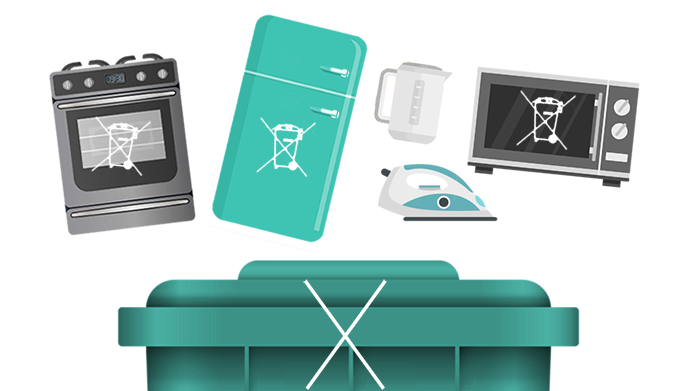
All products placed on the market should be marked with the ‘crossed out wheelie bin’ symbol, indicating that it should not be disposed of into the general waste. The thick bar under the bin denotes that the product has been placed on the market after 13 August 2005.
In addition, Producers are required to mark their products with a unique Product Identification Mark (PIM).
Producers of household equipment are required to fund the collection, treatment and recycling of WEEE from the household waste stream. The government sets an annual target for each WEEE stream and each producer must pay for a proportion of this cost based on their market share. So B2C producers do not have to recycle their own equipment, but instead fund a proportionate amount of recycling based on their market share.
In practice, producers will submit to their compliance scheme the weight of EEE they place on the market. This is sent to the Environment Agency who will calculate the amount of WEEE that each scheme must treat and recycle. The scheme will then carry out the collection, treatment and recycling and charge the cost back to members.
Producers of non-household equipment have specific obligations to fund the collection, treatment and recycling of their products when they become waste.
Producers can carry out the collection and treatment themselves, come to alternative arrangements with a third party (for example, their customers) or get their compliance scheme to discharge their obligations. The WEEE must go to an Authorised Approved Treatment Facility and the evidence must be sent to their compliance scheme.
Each quarter producers must report the amount of EEE placed on the market, by category and type. WEEEComply has a straightforward web-based reporting system. Members receive automated reminders to go online and submit data, and advice and guidance as to what must be reported.
Retailers of EEE to the public are termed ‘Distributors’ under the regulations. Distributors have obligations to take back waste equipment free of charge on a like for like basis. They can alternatively discharge this obligation by joining the Distributor Compliance scheme.
Contact WEEEComply for advice on registration.